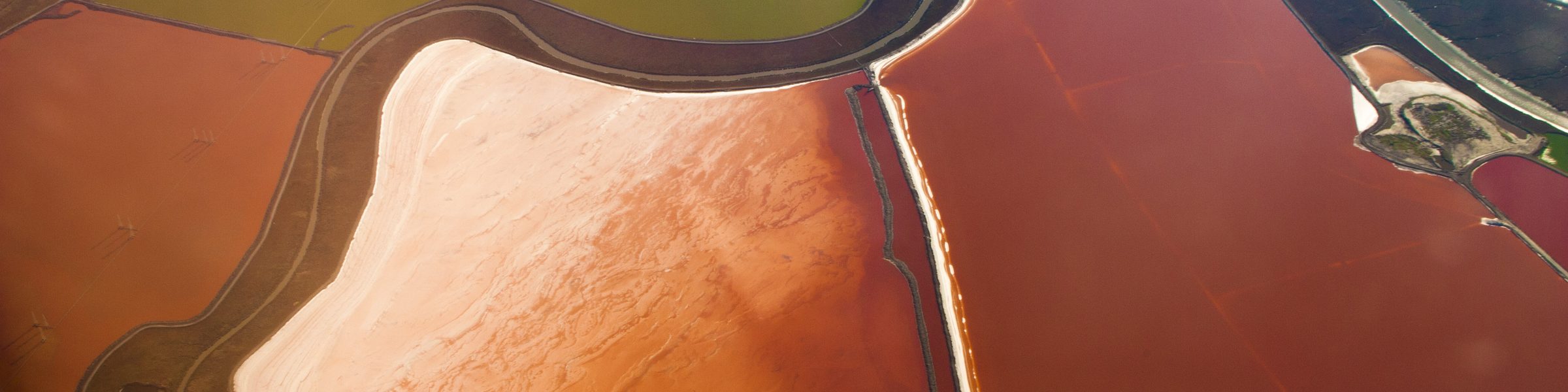
Photo: Nfrastructure, CC BY 2.0
FOR IMMEDIATE RELEASE
PALMA, SPAIN — JUNE 19, 2026 — The International Carotenoid Society (ICS) concluded its landmark 20th International Symposium on Carotenoids at the Hotel Victoria Gran Meliá in Palma, Spain, with the presentation of its highest honors. Marking the 60th anniversary of the symposium series, the society officially announced the two distinguished recipients of the prestigious 2026 ICS Presidential Award.
The Presidential Award recognizes individuals who have demonstrated exceptional leadership, outstanding scientific achievement, and a lifelong commitment to advancing the global field of carotenoid science.
2026 Presidential Award Recipients
2026 ICS Award Winners
View full lis of awardees and their professional biographies
The next Carotenoids GRC will be held on January 10–15, 2027 in Oxnard, CA. The conference brings together carotenoid researchers from diverse fields, providing an interdisciplinary forum to share cutting-edge discoveries, connect with peers, and foster collaboration across the community.
Link: https://www.grc.org/carotenoids-conference/2027/
In memory of Prof. Lowell D. Kispert (June 9, 1940– February 8, 2026), his transformative contributions to the field of carotenoid radicals are recognized here. Although Prof. Kispert had been a pioneer in studying organic radicals with EPR (Electron Paramagnetic Resonance) since 1960s, his first major carotenoid-focused study entitled "Carotenoid cation radicals: electrochemical, optical, and EPR study" appeared on March 1, 1988. Published in the Journal of the American Chemical Society, this landmark paper detailed the EPR detection of the carotenoid radical cation for the first time in solution. This paper followed a 1985 proposal Kispert submitted to the U.S. Department of Energy, which shifted his career focus toward the role of carotenoids in plant photosynthesis. These radical cations are crucial for understanding how plants dissipate excess light energy (photoprotection) and the antioxidant behavior of carotenoid pigments. For the next four decades, until his passing on February 8, 2026 at the age of 85, he dedicated his life’s work to carotenoids, producing about 125 publications in this area. In total, Prof. Kispert authored more than 300 scientific publications over the course of his nearly 60-year career.
Prof Kispert pioneered the use of simultaneous electrochemical and EPR (SEEPR) techniques to characterize the two-electron transfer character of carotenoids. Through the use of EPR and ENDOR (Electron-Nuclear Double Resonance), he elucidated the complex electron transfer processes occurring when carotenoids are adsorbed on solid matrices or in biological systems like Photosystem II. His work established the correlation between the redox properties of carotenoids and their ability to scavenge free radicals, providing keyinsights into how they protect plants from oxidative stress.
For researchers continuing his work, the following recent publications establish the prevailing analytical framework for carotenoid EPR and ENDOR methodology:
Dr. Kispert’s transition from 1960s organic radical chemistry—utilizing traditional X-band EPR—to the sophisticated carotenoid research of the 21st century stands as a testament to a lifetime of intellectual curiosity. Over four decades, he moved beyond standard measurements to master advanced EPR techniques to study carotenoid radicals. By integrating these with simultaneous electrochemical methods and computational DFT modeling, he pushed the boundaries of the field to better understand how these vital molecules protect life through electron transfer.
With deep sadness, we announce the passing of Professor Hanspeter Pfander on June 10, 2025, at the age of 85. He passed away peacefully of natural causes at the Bürgerspital in Berne, surrounded by his beloved wife Regula. Until his final days, he remained intellectually engaged, particularly in the fields of politics and science, with a lifelong passion for carotenoids. He looked back on a long and distinguished career in carotenoid research.
In 1972, Hanspeter was appointed Associate Professor at the Institute of Organic Chemistry at the University of Bern, succeeding Professor Grob to lead the carotenoid research group. From the outset, he established a productive collaboration with carotenoid researchers at Roche, particularly with Dr. Isler. In 1975, he served as General Secretary of the Carotenoid Symposium in Bern—marking the beginning of a 40+-year commitment to the International Carotenoid Society, which lasted until the Lucerne conference in 2017.
Over the course of his career, Hanspeter authored more than 200 scientific publications and patents, many of which were the result of international collaborations. Notably, he worked closely with the University Medical School of Pécs (Hungary) and the University of Agricultural Sciences and Veterinary Medicine of Cluj-Napoca (Romania). In recognition of his contributions, he was awarded honorary doctorates by Cluj in 1994 and by Pécs in 1997.
Hanspeter’s research focused on the synthesis of carotenoids. Through meticulous multistep synthesis pathways, he and his team succeeded in producing numerous carotenoids to better understand their structure, properties, and potential applications. His work laid the foundation for the synthetic accessibility of both commercially and scientifically significant carotenoids.
In the later stages of his academic career, he collaborated with Professors Jensen and Britton to compile a comprehensive book series on carotenoids. Volume 1A was published in 1995, and in 2017 the authors revisited the colorful history of carotenoids—creating a reference work that remains indispensable today.
His lifetime achievements were recognized by the International Carotenoid Society with the President’s Award in 2011 and the Otto Isler Award in 2017. The latter, which he fondly referred to as the ‘Nobel Prize of Carotenoids,’ held special significance for him.
Following his retirement in 1999, Hanspeter embarked on a new venture: in 2000, he co-founded Carotenature. What began as a post-retirement project evolved into a successful small business. He remained actively involved in the company until 2021, before entering a well-deserved second retirement.
We will remember Hanspeter as a dedicated researcher and scientist, an exceptional organizer, and above all, a warm-hearted individual with a fine sense of humor and an open mind.
Our heartfelt condolences go out to his wife Regula, his son Marc, his daughter Babette, and their families.
Please congratulate Dr. Radtke in receiving a very promising impact score on the prestigious MOSAIC K99/R00 Pathway to Independence Award from the NIH. Dr. Radtke will implement carotenoids as a biomarker for dietary intake in the primary care setting to support health-related behavior change in Food is Medicine interventions.
Dr. Radtke (mentee) and Dr. Moran (mentor) joined the pilot mentoring program launched last year by the ICS, in which early-career ICS members were paired with senior mentors in the ICS community. Dr. Moran met regularly with Dr. Radtke to provide critical feedback and expertise during the writing process that greatly improved the quality of Dr. Radtke’s grant submission.
VICC 2024 Attendees,
On behalf of the Organizing Committee I would like to thank the 126 attendees to our virtual conference who helped make it such a success! With 18+ countries represented from timezones all over the world that had them starting as early as 5:00 am and ending as late as 2:00 am local times, it showed a real dedication to the advancement of the many forms of carotenoid science. Special thanks go to the 57 speakers who prepared and presented engaging and informative talks, not always an easy thing to do in the virtual environment.
Special congratulation to our student/post-doc presentation award winners. In the background there was a panel of judges each day evaluating the talks for award consideration. There was not time at the end to complete the evaluation before the end of the conference so I have the honor of announcing and congratulating the Day 1, 2 and 3 winners. And thanks to Carotenature and AstaReal for providing funding for these awards.
VICC 2024 Program Book and indexed Abstracts Click for downloadable Abstracts booklet (pdf format)
Dr. Kevin Gellenbeck, President (ICS)
We are sad to report the peaceful passing of our longstanding friend and colleague, Steve Schwartz, Ph.D in late November 2023, due to complications of a chronic neurological condition known as Frontotemporal Degeneration (FTD). During his courageous battle with FTD he participated in research to enhance understanding and develop new treatments for FTD. Steve retired as Professor Emeritus and was the former Haas Endowed Chair at OSU in the College of Food, Agriculture, and Environmental Sciences at The Ohio State University.
Dr. Schwartz was actively engaged in carotenoid research for over three decades and participated in many International Carotenoid Society (ICS) activities and other efforts in the carotenoid community. Indeed, Steve was the recipient of the ICS Norman Krinsky Award in 2017. His carotenoid research focused upon investigating the metabolism of carotenoids, developing carotenoid rich food products for human clinical trials, and defining potential roles of carotenoids in human health and disease prevention. Of note, Professor Schwartz has advanced our understanding of bioavailability of carotenoids and their metabolism by developing and applying analytical methods to investigate differential uptake of the geometric isomers of lycopene as well as other carotenoids. He was a leader in the application of HPLC-Tandem MS as a tool to identify the role of dietary phytonutrients and their metabolites in cancer prevention. He contributed to efforts demonstrating that the Z- or cis-isomers of lycopene are preferentially absorbed from the human intestine relative to the predominant E- or trans-isomer present in foods.
Steve was born in Brooklyn, NY and earned a B.S. in Organic Chemistry from the State University of New York-Stony Brook in 1976 and a doctorate from the University of Wisconsin-Madison, with a joint major in food chemistry and analytical toxicology in 1982. He began his academic career at North Carolina State University in the Department of Food Science in 1983 and transitioned to The Ohio State University in 1996. During his career, Steve published nearly 300 peer-reviewed investigations and served many scientific societies (Am Chemical Soc, Am Society for Nutrition, Institute of Food technologists, among others), as well as multiple editorial boards. He trained over 50 graduate students for MS or PhD degrees and 34 post-doctoral trainees and visiting faculty. Professor Schwartz was a Fellow of the American Association for the Advancement of Science and the Institute of Food Technologists. He was recognized in 2013 by the American Society for Nutrition with the Gilbert A. Leveille Award.
Steve set an example for all to emulate inspiring students and stimulating research to promote human health through intellect and inquiry. Our academic community is diminished by Steve’s departure, but we take solace in knowing we are a much better place through his efforts. His legacy will continue through the many colleagues and trainees in academia and industry who are devoted to diet, nutrition, and health. Our thoughts are with Stephanie Smith, his devoted wife who provided so much joy and care, as well as his sons, Brian and Eric and their families.
Attendees at the 19th International Symposium on Carotenoids (ICS2023). The conference was held 9-14 July, 2023 at the Toyama International Conference Center, 1-2 Ote-machi, Toyama City, Toyama 930-0084, Japan
Travel awardees at the 19th International Symposium on Carotenoids (ICS2023). The conference was held 9-14 July, 2023 at the Toyama International Conference Center, 1-2 Ote-machi, Toyama City, Toyama 930-0084, Japan.
The ICS 2023 travel awardees thank all the Society members for their yearly contributions that funded the travel awards
The declared policy of The Society is “to provide, support and encourage all areas of carotenoid science, pure and applied, academic and commercial, research and educational.”